
Union City Address History Sources
A sound search for Union City previous residents begins by asking what each record can prove. The current parcel card fixes the parcel ID, situs address, indexed owner, mailing address, legal description, and any deed reference that appears. A situs address is the location being taxed. It is not the same as the address where tax mail goes. Recorded deeds then establish title transfers, while directories and census schedules can identify selected occupants. Permits may date work at the site, but they do not establish who slept there.
| Source | Years It Covers | Where Held | What It Shows |
|---|---|---|---|
| Current parcel and GIS | Current tax year; older online depth not published | Fulton assessor and GIS | Owner, situs, mailing address, parcel context |
| GSCCCA deed index | At least 1999 to present statewide | GSCCCA online | Indexed transfers and account-based images |
| Fulton deed books | Early 1800s to present | Fulton Deeds and Records Room | Authoritative chain of title |
| Haines reverse directories | 1946 through 2016/17 | Fulton Central Special Collections | Selected occupants and phones by address |
| Federal census | Public through 1950 | NARA, FamilySearch, library databases | Enumerated households and relationships |
| Permits and code files | Modern coverage; online start not published | Union City Community Development | Work, applicant, contractor, status, dates |
For a recent transfer, start online. For a mid-century occupant, move quickly to the reverse-directory shelf. For a much older parcel, preserve the last reliable deed citation and work at the courthouse or through archival catalogs. These sources overlap, but none is a complete resident roll.
Online Index Versus Fulton Deed Room
The statewide GSCCCA real-estate index guarantees index data for every Georgia county from at least January 1, 1999. Fulton County's physical instruments reach into the early 1800s. The comparison is important: the statewide date is a minimum online floor, not a claim that every Fulton image starts on that day. A limited-use account can search index summaries, while image viewing and printing require paid access.
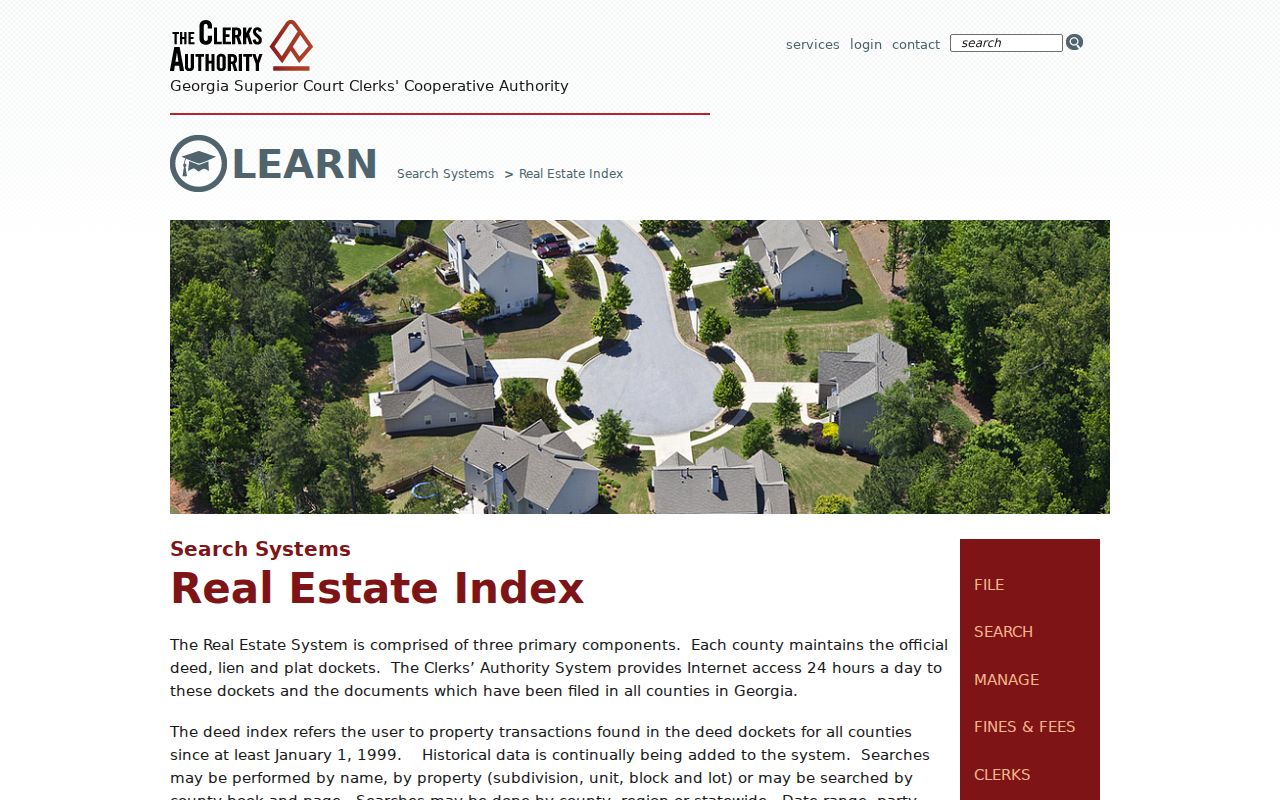
The coverage screen helps set expectations before a backward search. When a chain reaches beyond the useful online range, the Fulton Deeds and Records Room provides the next channel at the Lewis R. Slaton Courthouse in Atlanta. Patrons can research independently in the computer lab; staff do not conduct legal research by telephone. Computer and index access costs $5 for four hours.
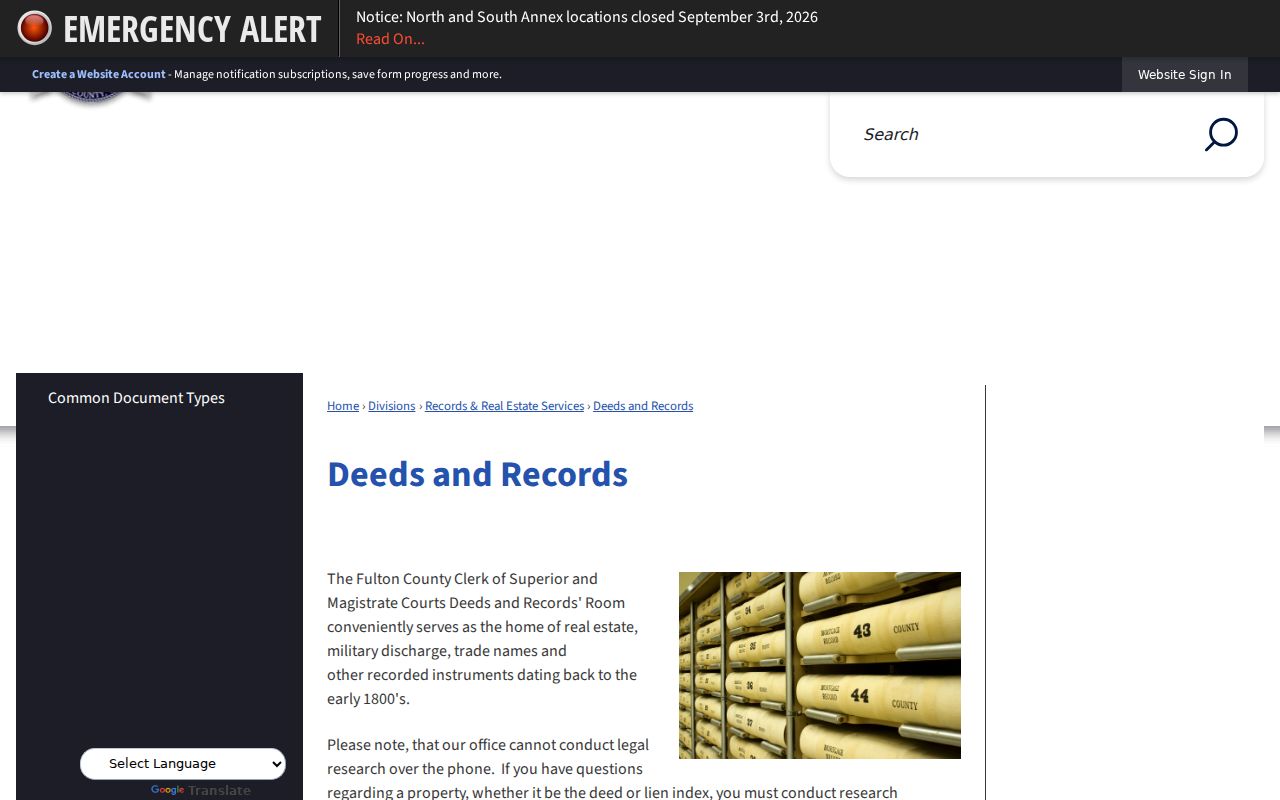
This source confirms the physical fallback for old instruments and gives the previous-resident search a continuous path when web access ends.
Trace Fulton Deeds Backward
The deed chain works backward from a known transfer. A grantor gives or transfers an interest; a grantee receives it. The chain of title is the linked sequence of those transfers. Names alone are not enough because two people may share one. Match the legal land description and prior book-and-page reference at each turn.
- Search the current address in qPublic. Save the parcel ID, legal description, indexed owner, and cited deed book and page.
- Retrieve the acquisition deed. Confirm the grantee, grantor, execution and recording dates, instrument number, and exact land description.
- Search that seller as a grantee during an earlier period. Match the subdivision, lot, land lot, or prior deed reference.
- Repeat the process. Note branches caused by estate deeds, corrective deeds, foreclosure deeds, or changes in an entity name.
- Take the last sound citation to the Fulton deed room when the online trail stops.
- Grantor and grantee
- The grantor transfers an interest. The grantee receives it.
- Chain of title
- The linked series of recorded transfers for the same land.
- Legal description
- The land lot, subdivision, block, lot, plat, or boundary wording that identifies land even if its street label changes.
Search Union City Deed Images
GSCCCA offers name, book/page, participating-county property, PT-61, lien, plat, and UCC search modes. The most useful route for previous residents is usually a Fulton County name search followed by direct book/page retrieval. Try spelling variants and initials. A later deed's prior-reference clause is often more reliable than a broad name result.
The GSCCCA account portal is where historical image access is managed. Regular access is $14.95 per calendar month per user, while a single-use account is $5 for one consecutive four-hour session. Printed pages cost $0.50 each. Limited-use access permits broad index searching and summaries without images.
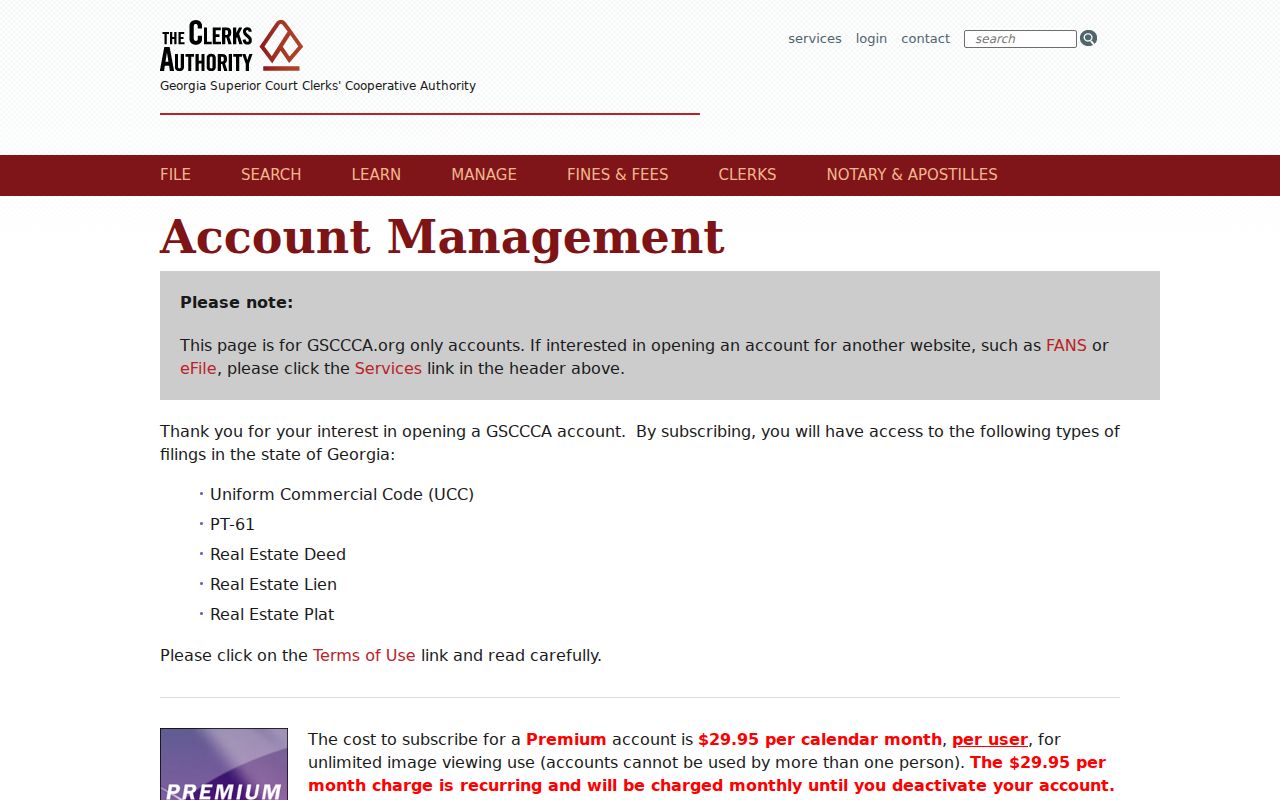
The account screen marks the line between an index clue and the recorded image needed to confirm the transfer. Save the instrument, book, page, county, and party roles before moving to the next deed.
Union City Records Before 1932
Union City was incorporated in 1908, but it then lay in Campbell County. Campbell was absorbed into Fulton County in 1932, and its deed books moved under Fulton custody. That history creates a catalog quirk for previous residents: an old Union City property may be filed under Campbell even though Fulton is the current keeper. Campbell deeds span 1828 to 1932, and surviving wills run through books and indexes that extend into the merger period.
The FamilySearch collection of Fulton County records from the Atlanta History Center includes Campbell and Fulton material, cemetery sources, vital extracts, voter registrations, and court records. Some sets require browsing images rather than typing a name.
The collection can bridge a household from an old deed or directory into probate, cemetery, and death evidence. Search both county headings and record the image group used.
Match Union City Residents by Year
Ownership and occupancy are different. Fulton Central Special Collections holds Haines Criss-Cross directories from 1946 through 2016/17. These volumes put streets and house numbers first, then show the listed occupant or telephone entry. Coverage must be checked issue by issue. A missing name may reflect a publication gap, an unlisted phone, a renter omitted from the book, or new construction.
- Choose a reverse-directory year near the transfer or event being studied.
- Find the street, then the house number, and copy the full entry and abbreviation key.
- Check the prior and following issues to bound the household's presence without claiming an exact move date.
- Pair the entry with the nearest public census schedule through 1950, then compare names, ages, relationships, and occupations.
- Use an obituary or probate file to connect a deceased resident with heirs or a later address.
The historical collection itself is treated in depth on the Union City city directory page. Here, the books serve as time markers in the backward trail.
Union City Buildings Beyond Sanborn
No authoritative Union City Sanborn fire-insurance sheet run was found. Nearby Fairburn and Palmetto have documented editions, but those cannot be stretched to cover Union City. Use recorded plats, tax digests, directory entries, aerial and topographic maps, photographs, and permit files instead. These sources date a structure or alteration without naming every resident.
Union City Community Development keeps building, electrical, plumbing, solar, HVAC, pool, roofing, demolition, driveway, plat, and related files. Modern applications move through IWORQ, which the city describes as an applicant system rather than an open address-history index. For older or public files, request a defined address, permit type, and date span under the Georgia Open Records Act. A certificate of occupancy may show the project address, owner or contractor, use class, square footage, issue date, and description. It proves work and approval, not continuous occupancy.
Georgia Archives Address Clues
The Georgia Archives research tools add county microfilm, tax digests, maps, newspapers, church and cemetery files, vital-index microfiche, the General Name File, Virtual Vault, Vanishing Georgia, and the Digital Library of Georgia. The reading room in Morrow is close enough to serve as a practical fallback when an online name index does not exist.
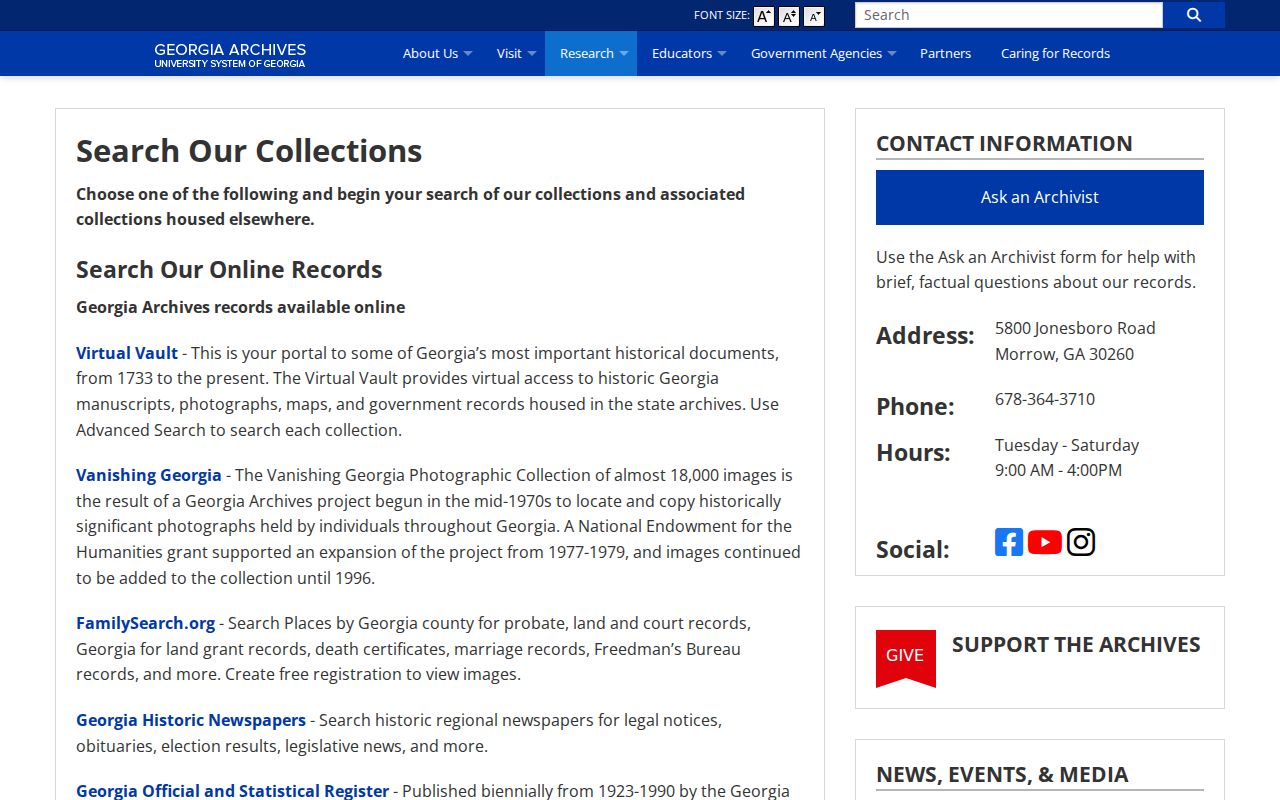
The archive screen points beyond deeds to the evidence that explains them. Tax digests can help follow a parcel between transfers, while newspapers and cemetery files may connect a title holder to relatives, a business, or a death notice.
Confirm Union City Past Households
A final account should keep each claim tied to its source. The deed names parties to a land transfer. The parcel card names the indexed taxpayer or owner. A reverse directory names a listed occupant or business for that edition. A census names the people enumerated in a household. An obituary or public probate petition can connect a deceased person to kin, an executor, or estate property. None should be made to say more.
Use the legal description when an address seems to vanish. Annexation, route-name changes, subdivision work, and postal standardization can break a literal search while the parcel identity remains stable. Union City's 2006 annexation added 5,330 acres and nearly doubled its area, so an older property may be correctly cataloged outside the city label used today.
Preserve a short research log as the chain grows. For each transfer, record the execution date, recording date, instrument type, grantor, grantee, book and page, prior-deed citation, and matching land description. Then add the closest directory, census, permit, obituary, or probate evidence in a separate column. Keeping ownership and household facts apart makes gaps visible. It also shows when the next step belongs at the Fulton deed room, Central Special Collections, Atlanta History Center, or Georgia Archives instead of another broad web search.
Lawful use. Research Union City previous residents for house history, family history, or estate work. Never use an address trail to harass, threaten, or track a living person.